New Bill to prioritise UK medical graduates for NHS training
Secretary of State sets out the need to prioritise homegrown talent for foundation and specialty training posts to support a sustainable NHS workforce
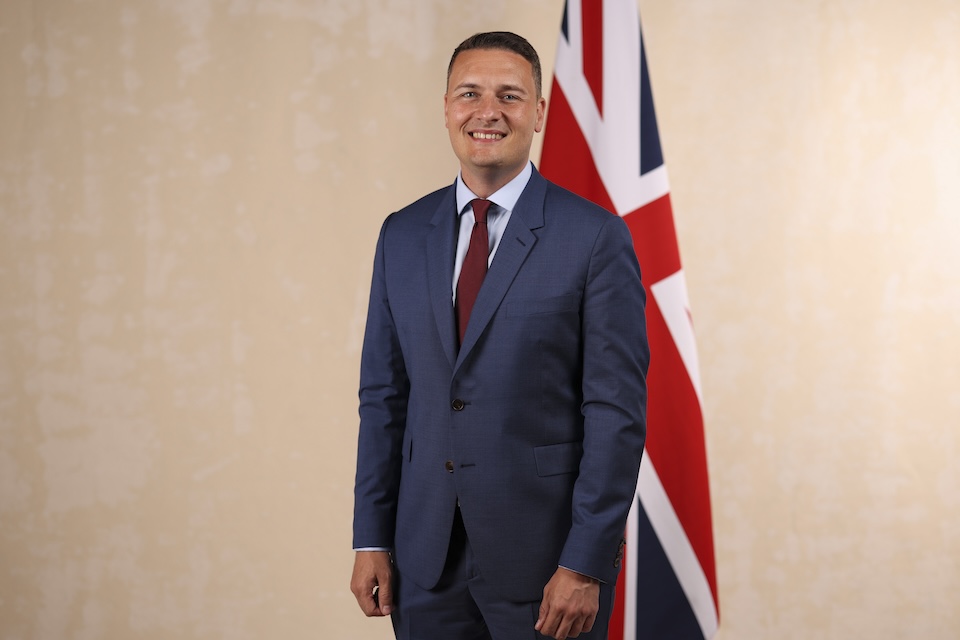
Thank you, Mr. Speaker. I beg to move that this Bill be read a second time.
Let me start by thanking the Leader of the House, the Chief Whip, colleagues in my department and the NHS, and the Bill team and Parliamentary counsel who’ve moved mountains to prepare this Bill in double-quick time.
I also want to once again place on record my sincere thanks to my counterparts in Wales, Scotland and Northern Ireland – and the respective Secretaries of State – for the spirit in which, regardless of party, they have helped us to bring this Bill forward.
Finally, I am enormously grateful to Jackie Baillie, [political content redacted], for her wise counsel.
Mr Speaker, the NHS is on the road to recovery.
Not least because of the Herculean efforts and dedication of NHS leaders and frontline staff who, even in the depths of winter, are delivering outstanding episodes of care hour-after-hour, day-after-day.
Among the encouraging signs of year-on-year improvement are waiting lists falling at their fastest in three years – down more than 300,000 [political content redacted]; quicker ambulance response times; shorter waits in A&E; and speedier cancer diagnoses for more people.
December was the busiest month in NHS history for 999 calls but despite that, ambulances arrived to heart attack and stroke patients nearly 15 minutes faster compared to last year.
The progress we’re seeing is a reminder that nothing positive for people who use the NHS, ever happens without the people who work in the NHS.
Our investment and modernisation are starting to restore confidence and renew belief among frontline staff – and with it, hope, optimism and ambition are returning.
That is why, outside of the pandemic, staff retention is at its highest in a decade and vacancies are at their lowest since records began in 2017.
Lots done; so much more to do.
I will always be honest about the state of our National Health Service: what is going well and where we need to improve.
And there’s no sugar-coating the fact that staff morale is still too low – and the way that some of our NHS workers are still treated, and the conditions in which some of them still work, are nothing short of a national disgrace.
That is not only a stain on our NHS. It shames us as a country when those who care for us in our hour of need:
- Suffer bullying, harassment and racist abuse.
- Have nowhere to rest, go to the loo or get changed.
- Can’t get a hot meal on a night shift.
- Have limited flexible working options.
- Must book holiday a year in advance.
- Need to login seven times just to use a PC.
- Spend time form-filling rather than looking after patients.
- And face basic errors with pay and contracts.
I literally had a doctor in tears in my constituency surgery just before Christmas as she described the way she was treated by one trust in London.
It is no way to treat the people who kept this country going when everything else stopped.
And so we are taking action.
Trusts are now implementing the 10-point plan for resident doctors.
And my department, with NHS England, is developing new staff standards to create better working practices and better conditions.
We have awarded above-inflation pay rises to everyone working in the NHS for this year and last year, beginning to recover the pay erosion seen under the last government.
And we have begun 2026 with constructive talks with the BMA’s resident doctors committee, as we seek to broker peace.
I have also told NHS leaders that they need to step up when it comes to the conditions NHS staff face.
They can’t expect the Secretary of State to micromanage availability of hot food in their canteen, for example.
But there are workforce problems, Mr. Speaker, that only government can solve.
We’ve known for years that the treatment of resident doctors is often totally unacceptable and the very real fears about their futures are wholly justified.
Every single time I have met a resident doctor, either formally or informally, they tell me without fail how their careers are blocked because there are far too many applicants for training places.
Not only do I think they have a legitimate grievance. I agree with them.
UK graduates used to compete among themselves for foundation and specialty roles.
[Political content redacted]
That is why we see the training bottlenecks that resident doctors face today.
In 2019, there were around 12,000 applicants for 9,000 specialty training places.
This year, that has soared to nearly 40,000 applicants for 10,000 places, with nearly twice as many overseas-trained applicants as UK-trained ones.
As a result, we now have the ridiculous state of affairs where UK medical graduates – those whose training British taxpayers fund to the tune of £4 billion a year, who want to carve out a career in the NHS, are being lost abroad or to the private sector.
[Mr. / Madam Deputy] Speaker, if we don’t deal with this, then the scale of the issue, and the resentment it causes, will just get worse.
More taxpayers’ money will be wasted, more British medics will turn their backs on the NHS, and it is patients who will ultimately suffer.
–
We must also break our overreliance on international recruitment.
I’m really proud of the fact the NHS is an international employer.
It is no coincidence that the Empire Windrush landed on these shores in 1948 – the very year our NHS was founded.
We’re very lucky that we have people from around the world come and work in our health and care services.
Since Brexit, under the last government, we have begun to see something much more corrosive: the NHS poaching staff from countries which are on the World Health Organisation’s red list because their own shortages of medical practitioners is so severe.
The continued plundering of doctors from countries which desperately need them, while we have an army of talented and willing recruits who can’t get jobs, is morally unacceptable.
[Political content redacted]
Competition for medical staff has never been fiercer: the World Health Organisation estimates a shortfall of 11 million health workers by 2030.
Shoring up our own workforce will limit our exposure to such global pressures, without depriving other countries of their own homegrown talent.
–
Finally, Mr. Speaker, without action to prioritise UK medics, we will also make it tougher than it already is for those from working class backgrounds like mine to become doctors.
Or for that matter for them to even consider a career in medicine.
The odds are already stacked against them: they’re less likely to know doctors; their teachers may be less familiar with helping students into medical school; they’ll have fewer opportunities to do work experience; and fewer people in their lives telling them they should aim high and reach for the stars.
The result is that only 5% of medical school entrants are from lower-income, working-class backgrounds.
Someone’s background should not be a barrier to becoming a doctor.
And so our job as a government – [Political content redacted] – isn’t just to make sure a few kids like me beat the odds.
It’s to change the odds for every child in this country so they can go as far as their talents will take them.
Talent is everywhere in Britain, but opportunity is not.
And we all suffer when we aren’t unleashing the full potential our country has to offer.
How many world-class surgeons never made it because the ladder was kicked out from under them? Think about how we could desperately do with them today.
For all these reasons, Mr. Speaker, prioritisation is critical to support long-term, sustainable workforce planning for the NHS.
Which is why we are urgently bringing forward this Bill.
The Medical Training (Prioritisation) Bill implements the commitment in our 10 Year Plan for Health to put homegrown talent at the front of the queue for medical training posts.
Starting this year, it prioritises graduates from UK medical schools and other priority groups over applicants from overseas during the current application round and in all subsequent years.
For the UK Foundation Programme, the Bill requires that places are allocated to UK medical graduates and those in a priority group before they are allocated to other eligible applicants.
For specialty training, the Bill effectively reduces the competition for places from 4-1 to 2-1.
For posts starting this year there must be prioritisation at the offer stage – and for training posts starting from 2027, prioritisation will apply at both the shortlisting and offer stages.
Mr. Speaker, in the 10 Year Plan we committed to prioritising international applicants with significant NHS experience for specialty places in recognition of the contribution they’ve made to our nation’s health.
This year, we will use immigration status as a proxy for determining those eligible so that we can introduce prioritisation as soon as possible.
From next year, under the terms of this Bill, we will apply different metrics – for example, number of years worked in the NHS.
I want to be clear that these changes will have no impact on doctors working in the armed forces, who will continue to be a priority.
Nor does this Bill exclude international talent, who will still be able to apply to roles and continue to bring new and vital skills to our NHS.
The same applies to those students, even those who are British citizens, fully funding their training at UK universities with medical schools in countries likes Singapore, Malta and elsewhere.
The principal here is homegrown talent. It’s not about where students are born, it’s about where they’re trained.
And what this Bill does, is return us to the fair terms on which those homegrown medics competed before Brexit.
In order for the changes to benefit applicants in the current round – that is, for posts starting this August – this legislation needs to achieve Royal Assent by March the 5th.
Any delay will risk vacancies in August and disrupt planning in NHS trusts, who rely on their new trainees to deliver frontline care.
Doctors too need sufficient time to find somewhere to live, sort childcare, and arrange other aspects of their lives before their posts start.
I am grateful that Parliament has agreed to expedite the Bill’s progress.
[Political content redacted]
Having stressed the urgency, I want to address the commencement clause included in the Bill.
It is important for a number of reasons.
First and foremost, it’s a failsafe.
We are running to an extremely tight deadline here and I do not want to be in a position where a law is enacted and we’re unable to implement it in a timely, orderly fashion.
Secondly, there is a material consideration about whether it is even possible to proceed if strikes are ongoing.
The disruption strikes cause and the pressure they put on resources would undoubtedly make it a lot harder to operationally deliver the measures in the Bill.
Thirdly, I am keeping my options open.
We’re in a good place with the BMA, in terms of the spirit with which we’ve entered into the latest round of talks.
But we do not yet have an agreement on their disputes and we are waiting for the outcome of their ballot.
I am not going to do anything now that unnecessarily makes it any harder to end the strikes.
[Political content redacted]
Mr. Speaker, British taxpayers spend £4 billion training medics every year.
We then treat them poorly, place obstacles in their way, and make them fearful for their futures.
We’re forcing young people who should be the future of our NHS to work abroad or in the private sector – or to quit the profession entirely.
It’s time we protect our investment – and our homegrown talent.
This Bill will ensure a sustainable workforce, cut our reliance on foreign labour, halve competition for places, and give homegrown talent a path to become the next generation of NHS doctors.
And I commend it to the House.