Severe fever with thrombocytopaenia syndrome (SFTS): epidemiology, outbreaks and guidance
The epidemiology, symptoms, diagnosis and management of severe fever with thrombocytopaenia syndrome (SFTS).
This content was originally produced by Public Health England (PHE). This content is now owned and managed by the UK Health Security Agency (UKHSA).
Epidemiology
Severe fever with thrombocytopaenia syndrome (SFTS), caused by SFTS virus (SFTSV), was first isolated from human blood in 2009 in China.
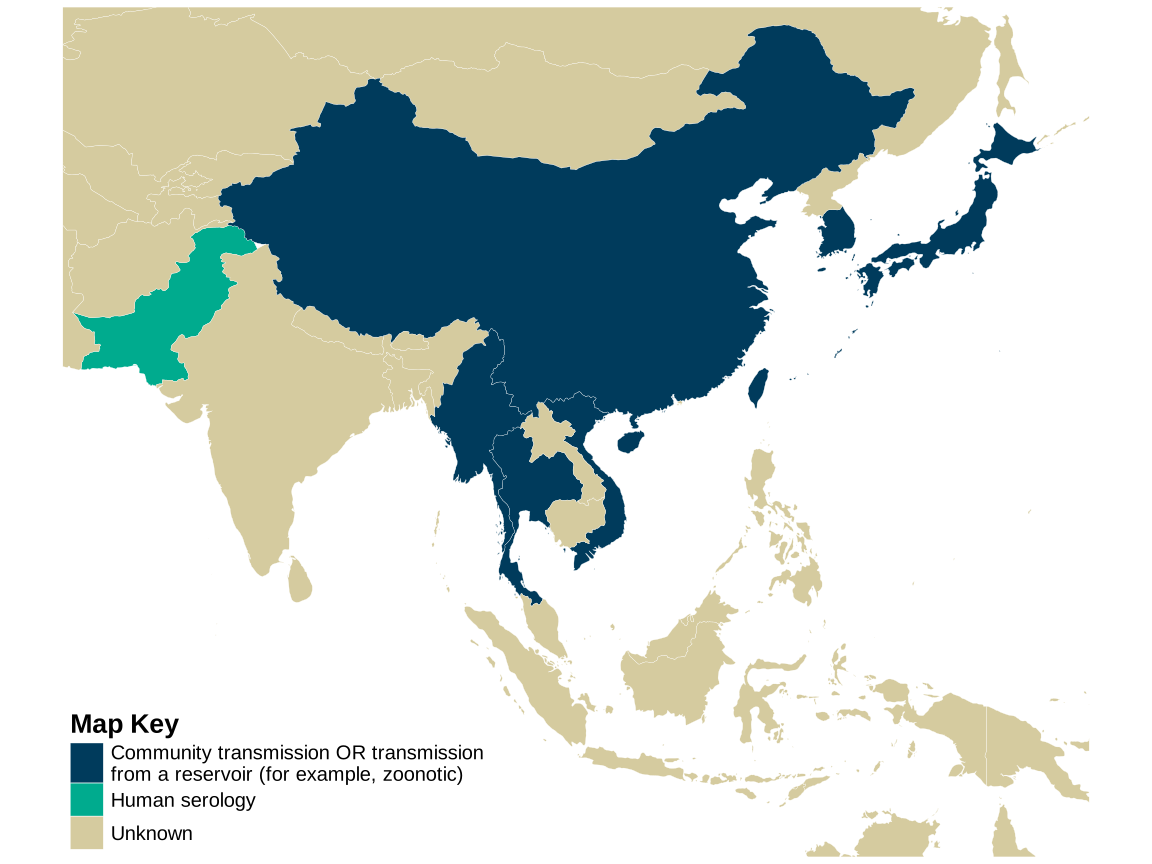
SFTS is a tick-borne zoonosis, but rare cases of human-to-human transmission have been clearly documented. Most human infections occur in individuals exposed to ticks in rural mountainous areas of Central and Eastern China. Cases have also been identified in Japan, South Korea, Taiwan and Thailand. SFTSV has additionally been detected retrospectively in stored blood samples from patients with thrombocytopaenia in Vietnam, and there are reports of serological evidence of SFTS infection in Pakistan.
Figure 1. Map of SFTS evidence.
See the HCID: country specific risk webpage for further information.
Seroprevalence studies have estimated that 4.7% of populations in endemic areas of China have antibodies against SFTSV.
SFTS is a seasonal disease with cases seen predominantly between May and July in China, May and October in South Korea, and April and August in Japan. Reported case fatality rates have varied between countries from 5.2% in China to 32.6% in South Korea.
The primary vector is the Asian long-horned tick, Haemaphysalis longicornis, which has demonstrated north and westward expansion in China, and into new regions in South Korea and Japan. Although it can be found in Australia, New Zealand, islands in the Western Pacific region and in the USA, there are no reports of SFTSV having been detected in ticks in these countries. Several other types of tick can be infected with SFTSV in endemic countries, though their role in transmission to humans is less clear.
Transmission
Infections usually pass to humans by the bite of a tick carrying SFTSV. Sheep, goats and other mammals may serve as intermediate hosts. Many different animals may be infected naturally, including rodents, small mammals and yaks, and humans are accidental hosts when bitten by infected ticks.
Human-to-human transmission of SFTSV requires close contact with an infected individual, their blood or other body fluids, or their immediate environment. Nosocomial transmission is reported to have occurred in emergency departments and intensive care units in China and South Korea. Transmission via percutaneous exposure (for example, needle-stick injury) has also been reported. The possibility of transmission via aerosol-generating procedures, without the use of sufficient respiratory protective equipment, has also been proposed.
Symptoms
The key features of SFTS are high fever and a low platelet count. The incubation period is 7 to 14 days, typically around 9 days. The illness begins with a non-specific prodrome, which is often flu-like and associated with fever. Gastrointestinal disturbances may also be present, including abdominal pain, vomiting and diarrhoea. The prodrome lasts for around 7 days.
Most cases of SFTS are symptomatic with disease severity ranging from mild illness, which resolves spontaneously to severe illness which develops in the second week and can involve acute kidney injury, myocarditis, haemorrhage, meningoencephalitis and multi-organ dysfunction.
In those who survive severe illness, signs of recovery usually emerge around days 8 to 11 of illness, accompanied by a decrease in blood viral load and recovery of the platelet count.
In fatal cases, high-level viraemia and thrombocytopaenia persist or worsen, often associated with increasing blood levels of alanine aminotransferase (ALT) and aspartate aminotransferase (AST).
Diagnosis
Any suspected case of SFTS should be discussed with local infection specialists. In the UK, clinicians who suspect that a patient may have SFTS should seek urgent advice from the UK Health Security Agency’s (UKHSA) Imported Fever Service (IFS) on 0844 778 8990.
The IFS operates 24/7 and provides advice on risk assessment, immediate management and infection control.
The IFS will also coordinate urgent testing at UKHSA’s Rare and Imported Pathogens Laboratory (RIPL), Porton.
RIPL provides polymerase chain reaction (PCR) testing for SFTS including out of hours if indicated.
IFS will also advise on sample collection precautions and transport requirements.
Treatment
SFTS is classed as a contact high consequence infectious disease (HCID) in England. There are currently no licensed vaccines or specific antivirals to treat SFTS. Ribavirin has been administered to patients with SFTS, but there is no conclusive evidence of therapeutic effect. Favipiravir has shown promise in animal studies and limited clinical use but is not a universally approved therapy. Experimental treatments have been proposed, including tocilizumab and convalescent plasma.
The key treatment is supportive care and includes:
- replacing platelets and other blood components
- balancing fluids and electrolytes
- maintaining oxygen status and blood pressure
- organ support as needed
Guidelines
The guidelines provide advice on risk assessment, testing and management of suspected SFTS cases presenting to healthcare services within the UK.
Infection prevention and control
There is no licensed vaccine for human use.
Persons living in or visiting endemic areas should use personal protective measures to avoid contact with ticks, including:
- avoiding areas where ticks are abundant at times when they are active
- using tick repellents
- checking clothing and skin carefully for ticks
Travellers who are hiking or doing other outdoor activities may be at increased risk of tick bites. Refer to advice for travellers about how to avoid tick bites.
The Travelhealthpro website has information about current outbreaks and travel advice.
In the UK, suspected cases must be immediately isolated and assessed using appropriate VHF assessment personal protective equipment. See the ACDP algorithm and guidance on management of patients. Confirmed cases will be notified immediately to the High Consequence Infectious Diseases Network.
UK risk assessment
SFTSV is not found in the UK. Travel-associated cases of SFTS have not been reported to date.
Updates to this page
-
Content reviewed and updated.
-
First published.