Plague: epidemiology, outbreaks and guidance
The epidemiology, symptoms, diagnosis and management of plague.
Epidemiology
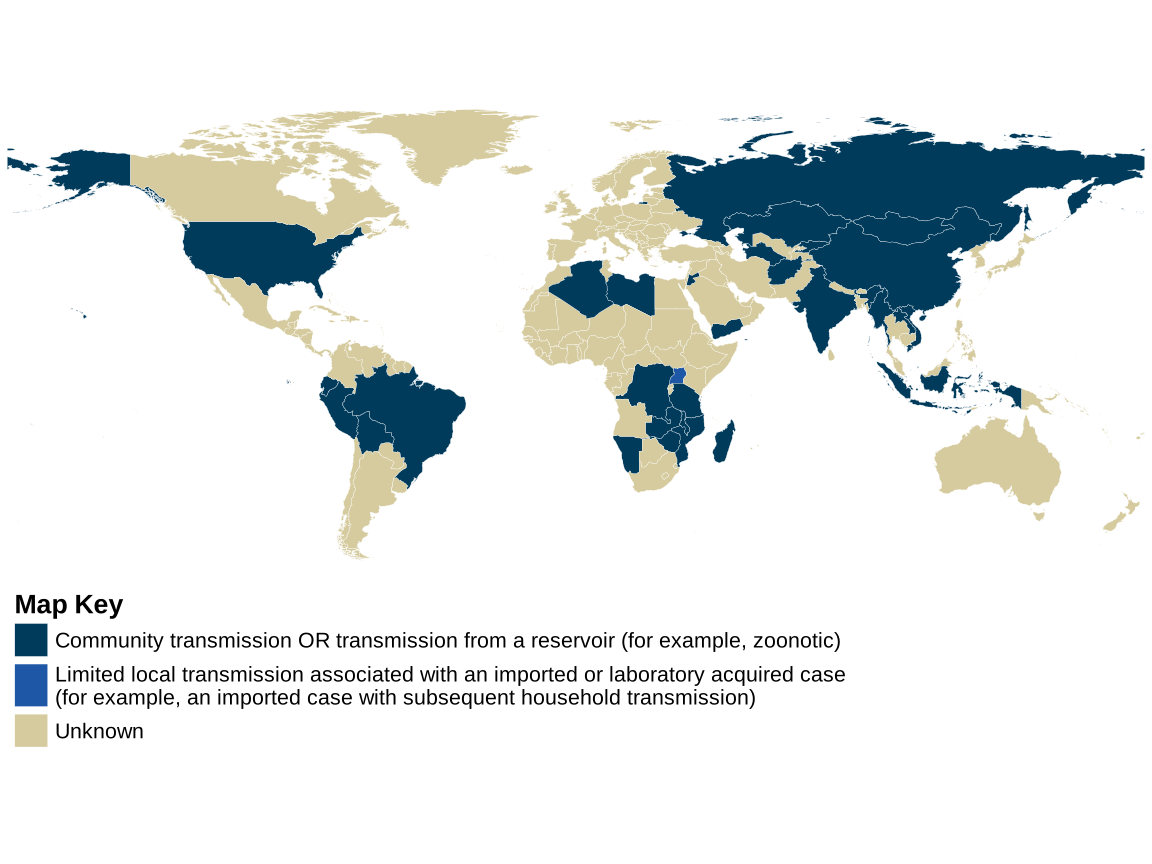
Plague is a disease caused by infection with the bacterium Yersinia pestis, usually found in small mammals and their fleas. It is no longer found in the UK, but occurs in several countries in Africa, Asia, South America, and in the USA. Since the 1990s, most human cases have occurred in Africa, with the Democratic Republic of Congo (DRC) and Madagascar considered to be the most highly endemic countries. Madagascar experiences regular seasonal outbreaks, but to date there have been no known exported cases.
Figure 1. Global distribution of reported Plague cases since 1995
Transmission
Rodents are the main reservoir of infection. Yersinia pestis can be transmitted to humans in a number of ways, including through bites from infected rodent fleas or from handling infected animals or their tissues.
In higher income countries, sporadic infections may be caused by exposure to infected cats (via fleas, scratches or bites) who have acquired infection from interactions with wild rodents. Laboratory exposure may also occur.
Another important route of transmission is through the inhalation of infectious respiratory particles from a patient with pneumonic plague. This usually requires close and prolonged contact with the patient. Humans have also been infected via the respiratory secretions of infected cats.
Symptoms
There are 3 main forms of plague depending on the route of infection: bubonic, pneumonic and, more rarely, septicaemic. Other forms such as meningitis and pharyngitis are seen but are rare.
Bubonic plague
Bubonic plague is the most common form of plague and is usually caused by the bite of an infected flea. The bacteria travel from the site of the bite to local lymph nodes which become inflamed and painful. This is called a bubo. Patients usually present 2 to 8 days after exposure with fever, headache, chills and buboes. If this form of infection is not treated, the bacteria can then spread to the lungs, meninges or bloodstream.
Pneumonic plague
Pneumonic plague is the rarest and also the most severe form of plague. It may result from spread to the lungs from advanced bubonic plague but is more usually due to inhalation of infectious particles. Person-to-person transmission is seen but the degree of contact needed is not clear. Patients present with a rapidly developing pneumonia and may produce bloody sputum. Untreated pneumonic plague is almost always fatal. Even with prompt recognition and treatment, mortality is around 30%. Pneumonic plague is classed as a high consequence infectious disease (HCID).
Septicaemic plague
Septicaemic plague occurs when infection spreads through the bloodstream. This may be a progression of untreated bubonic plague in 10 to 20% of cases or can occur as the primary infection. It causes a sepsis syndrome with bleeding, tissue necrosis and shock. Patients may also have non-specific symptoms such as abdominal pain, nausea and vomiting, and diarrhoea. Untreated, septicaemic plague results in disseminated intravascular coagulation and microthrombi formation. This causes the necrosis and gangrene classically seen in the extremities of patients suffering from the ‘Black Death’.
Diagnosis
Yersinia pestis is a Gram negative rod which will grow in standard laboratory cultures. It is a Hazard Group 3 organism and samples suspected of containing Y. pestis should be handled at an appropriate containment level. A hallmark of Y. pestis is the bipolar ‘safety pin’ appearance on Gram stain, and the very high bacterial load which means it may be seen on direct microscopy of sputum and blood samples. Commercial systems may misidentify it as other Yersinia spp. or Enterobacterales, and laboratories using MALDI TOF mass spectrometry systems should be particularly mindful of the need for subscribing to an up-to-date database which includes the biothreat agents.
Any suspected case of plague should be discussed with local infection specialists. In the UK, clinicians who suspect that a patient may have plague should seek urgent advice from the UK Health Security Agency’s (UKHSA) Imported Fever Service (IFS) on 0844 778 8990.
The IFS operates 24/7 and provides advice on risk assessment, immediate management and infection control.
The IFS will also coordinate urgent testing at UKHSA’s Rare and Imported Pathogens Laboratory (RIPL), Porton. RIPL provides polymerase chain reaction (PCR) testing for plague including out of hours if indicated.
IFS will also advise on sample collection precautions and transport requirements.
Lateral flow devices have been used in recent outbreaks but are not available for routine testing.
Treatment
All forms of plague are associated with a high mortality rate (approaching 100% for pneumonic and septicaemic forms and around 60% for bubonic plague) and, in addition, pneumonic plague can be associated with human-to-human transmission. Antibiotic treatment can be effective but early diagnosis and treatment are vital. If there is a credible suspicion of plague based on exposure history, clinical syndrome or laboratory findings, treatment should be started immediately before laboratory confirmation. Suspected cases should be discussed urgently with local infection services and / or the IFS.
If plague is confirmed, contacts and other potentially exposed individuals will need to be risk assessed and offered antibiotic prophylaxis if indicated.
Notification
All forms of plague are statutorily notifiable. If there is credible suspicion of plague based on clinical syndrome, exposure history or laboratory findings, the local health protection team should be notified immediately.
Prevention and advice for travellers
Currently there are no commercially available vaccines. Preventative measures include:
- using a DEET-based insect repellent to protect against flea bites if travelling to an area where plague is found in animals
- avoiding contact with dead animals, infected tissues or materials
- avoiding crowded areas where cases of pneumonic plague have been recently reported
Travellers to areas affected by plague should be aware of the risks and the measures they can undertake to reduce the likelihood of infection. Unwell travellers who have been to areas where plague occurs, and who may have had contact with rodents or fleas or anyone with symptoms or diagnosed with pneumonic plague, should seek prompt medical advice with details of their travel history and activities.
See NaTHNaC advice.
Cases in the UK
Plague is not found in the UK. The probability of a case occurring in a person returning to the UK is very low.
Updates to this page
-
Content reviewed and updated.
-
Updated epidemiology and risk assessment sections.
-
Added clinical and laboratory guidance.
-
Added risk assessment for the UK.
-
First published.