Global fusion sector scaling up, creating UK SME opportunities
UKAEA launches Global Fusion Guide for SMEs, helping businesses with clear, practical steps to collaborate with, and supply, fusion developers worldwide.
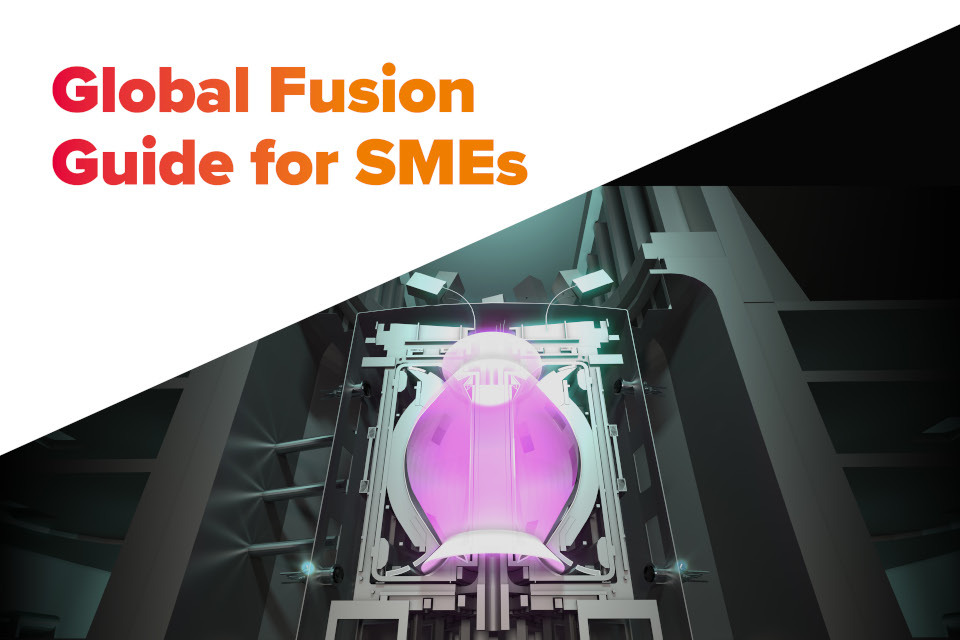
Image credit: United Kingdom Atomic Energy Authority
The global fusion energy sector is entering a decisive decade of rapid growth, creating significant new commercial opportunities for small and medium sized enterprises (SMEs) across the UK.
The Global Fusion Guide for SMEs, launched today, responds directly to this opportunity. The guide provides UK businesses with clear, practical steps on how to collaborate with, and supply to, fusion developers worldwide.
As fusion moves from laboratory scale research towards full demonstration power plants, companies are increasingly relying on external suppliers. This shift is opening new markets for UK businesses with capabilities in engineering, manufacturing, robotics, advanced materials, digital systems and specialist services - including those that have no prior experience in fusion.
Globally, more than 68 private fusion companies are now operating, alongside major public programmes, with over £100 billion expected to flow into fusion development between 2026 and 2035. A significant proportion of this spending will be on industrial systems, components and services, creating long‑term demand well suited to UK SME capabilities.
Fanny Fouin, Programme Manager for Fusion Futures, UKAEA, said:
The Global Fusion Guide for SMEs shows that fusion is not a closed market. Many of the skills required already exist across UK industry and the guide will help businesses see how their capabilities can translate across into this growing sector.
Over the next decade, a significant share of the global investment in fusion will be spent on industrial systems, components and services. These represent long term, high value opportunities that UK SMEs are well placed to deliver.
Naomi Mburu, Lead Analyst, Fusion Advisory Services, said:
As an SME ourselves, we know how valuable it is to have clear, expert guidance when time and resources are limited. With entry points fragmented across portals, programmes and networks that vary by country and technology, access rather than capability is often the real barrier. This guide aims to make that first step clearer for SMEs globally.
Melanie Windridge, Co-Director of Fusion Advisory Services, Founder of Fusion Energy Insights and FusionX Group, said:
Robust supply chains will be critical to fusion’s success, so there are opportunities for SME growth over the next decade if they can navigate the initial hurdles. Reliable information will be key to this, which is why Fusion Advisory Services was delighted to work with UKAEA on this report as a starting point for conversations.
About the guide
The Global Fusion Guide for SMEs supports the second part of UKAEA’s mission – to maximise UK economic benefit. It is designed to help UK businesses understand where opportunities are emerging and how to engage with the global fusion sector in a practical, accessible way.
The guide sets out the global fusion technology landscape, providing an overview of fusion’s potential and the current state of development. It introduces the major public and private programmes worldwide, including the UKAEA Group’s STEP (Spherical Tokamak for Energy Production) programme.
It explores the key technologies required to deliver fusion power, with clear explanations of where demand is expected to grow and where SME capabilities are particularly well matched. This includes areas such as superconducting magnets and cryogenics, lasers and power supplies, robotics and remote handling, advanced materials, tritium systems, heating technologies, and the growing role of advanced computing and artificial intelligence.
The guide also sets out global routes to market, providing region‑by‑region guidance covering the UK, United States, Europe and Asia. This section highlights practical entry points for SMEs, including supplier portals, procurement pathways, funding mechanisms and innovation programmes.
Finally, the guide offers a plain language overview of fusion standards and regulatory frameworks in key markets. It explains how fusion is regulated differently from nuclear fission and outlines practical first steps for SMEs, such as joining fusion clusters, attending supplier engagement events, and applying for innovation funding to support early market entry.