Snapshot surveyWetland Mosquito Survey
The Snapshot project aims to expand mosquito surveillance in wetland habitats, and to further collaboration and public engagement in arbovirus surveillance across England.
Applies to England
Mosquito snapshot survey
CCHSThe navigationSnapshot menu:survey
aims CCHSto homepageTopic:provide healtha impacts
stratified Vector-borneapproach disease:to mosquitoesPartwetland of:mosquito monitoringsampling across England, provide data on native mosquito distributions and researcharbovirus (arthropod-borne virus) presence, and develop collaboration and public engagement to support vector surveillance.
ImportantThe resourcesproject provides samples for snapshotWest survey:
SnapshotNile survey
Morevirus content:
NationwideandmosquitoUsutusurveyMosquitoesvirusspeciestestingprofilesMosquitoandsummaryall-dataresearchgeneratedprojects
Summaryis used by the UK Health Security Agency (UKHSA) Medical Entomology team (MEZE) to inform One Health cross government risk assessments on mosquito-borne disease (HAIRs).
The Snapshotproject expandsaims mosquitoto surveillancesample inat least one wetland habitats.site Itin encouragesevery 50km grid square in England every summer between the publicmonths of July to getSeptember, involvedinclusive, into arbovirusenable surveillancean acrossexpanded England.survey Inof 2024native thismosquitoes wasand potential arbovirus transmission in wetland habitats.
This is a volunteer-supported project in collaboration with the RADARReal-time Arbovirus Detection And Response (RADAR) project. AllMosquito mosquito traps wereare run by volunteers from numerous organisations who have access to wetland habitats, notably the Royal Society for the Protection of Birds (RSPB,), British Trust for Ornithology (BTO,), Wildfowl Wetlands Trust (WWT,), the Wildlife TrustTrust, local authorities, and othermembers organisations.of the public.
The
Figure 1: Map of England divided into 50km grid squares, showing Snapshot Mosquito Survey site from 2024
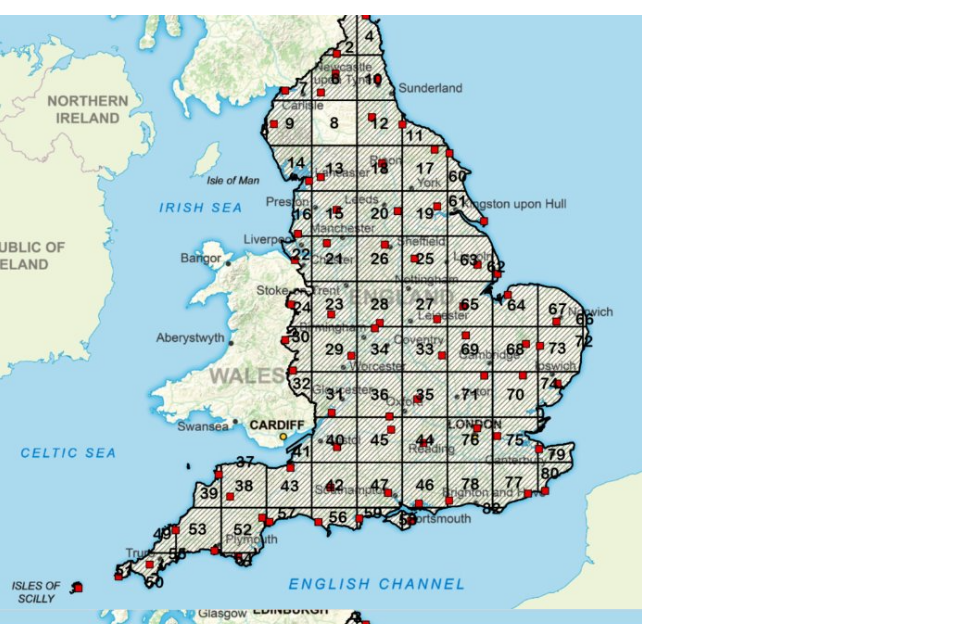
We projecthope aimedall data collected will help optimise future surveillance strategies to runsupport improved assessments of arbovirus risk across a BGwider Progeographic area and help target key vector groups to protect wildlife and public health in the future.
We aim to make the Snapshot Wetland Mosquito Survey a core component of UKHSA mosquito trapsurveillance atand a component of the National Contingency Plan for West Nile Virus in England in 2026.
Mosquito sampling methods
The project aims to sample a wetland site in every 50km²major grid-square50 km2 grid square in England during the lateseason summerof peak vector activity (July to September).
Wetlands are targeted for sampling as these habitats support a variety of 2024.mosquito species and are also sites where migrating birds are likely to make landfall and remain for extended periods.
Traps wereare rundeployed for three-night trapping sessions, and sessions are repeated 2 to 3 consecutivetimes, nightswith duringexact twotrapping dates determined locally to allow for volunteer flexibility.
All mosquitoes captured are posted back to our laboratory on the last trapping sessions:day onceof fromeach trapping session.
Mosquitoes are identified to species-level using taxonomic keys.
All mosquito samples collected are identified on dry ice to keep virus integrity and screened for Usutu and West Nile viruses.
The BG Pro Mosquito Trap
Mosquitoes are attracted to hosts (for example mammals, including humans, and birds) using carbon dioxide and skin scent cues, with host preference varying by species. The BG Pro mosquito trap is designed to mimic these cues using a BG Mozzibait attractant - an artificial scent designed to replicate host scent cues. Bird and mammal-biting mosquitoes in the 12area are attracted towards the lure, which is placed inside the trap. A small fan then draws these mosquitoes in and 25prevents them from escape. The mosquitoes are trapped inside a drawstring catch bag, that can then be removed and posted to us for analysis.
We can improve mosquito capture using a carbon dioxide source alongside the BG Mozzibait. This comes in the form of August,a bag of yeast, sugar and againwater betweenthat will produce carbon dioxide for approximately 24 hours.
For trap use, please refer to the 2short videos on the RADAR website
Figure 2: The BG Pro in a wetland habitat
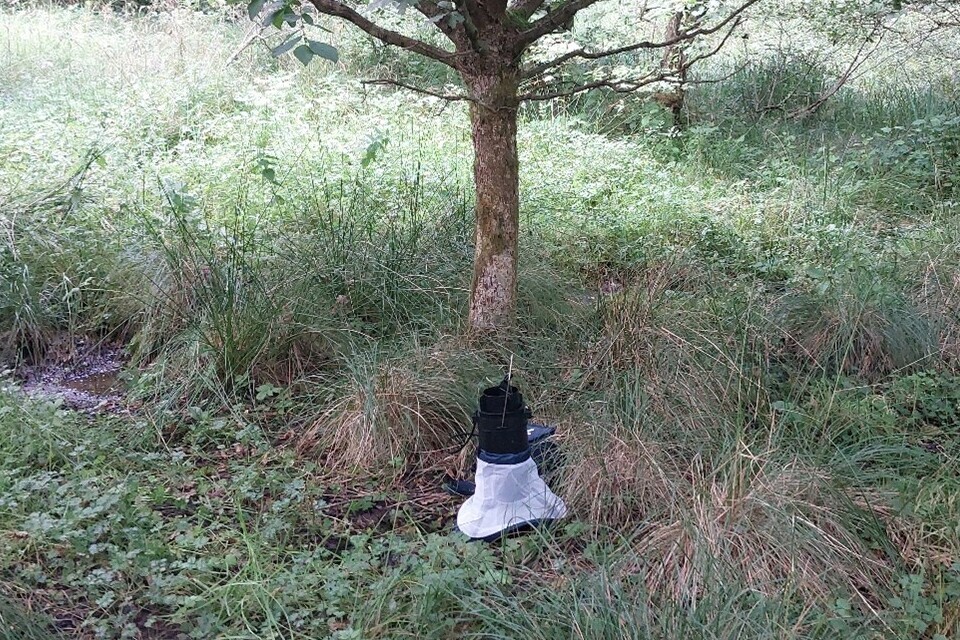
This is a small, portable and 20easy ofto September.assemble mosquito trap.
Get involved
AThis totalproject focusses on wetlands, nature reserves, and other sites likely to be harbouring native mosquitoes and migratory birds. Trapping should be conducted with local permissions. Sites should be relatively free of 72vandalism, and easy to access by volunteers.
We ask volunteers wereto recruitedplease position the trap in 2024an area sheltered from high winds and heavy rain, and to runavoid aplacement trap.accessible Theyto representlivestock mostor easily visible to members of the 50km²public.
The grid-squares.trap Allwill be most effective when standing near shady areas, such as bushes, shrubs and hedges. They are ideally positioned near small or shallow water bodies that may be mosquito breeding sites. Wherever you may have noticed mosquitoes caughtor where you have been bitten in the projectpast, wereis testedprobably fora Usutugood virusplace.
Aims:
- together sample at a wetland site in every 50km grid square in England
- target areas of mosquito activity and
WestmigratoryNilebirdvirus.landfall - conduct 2 to 3 trapping sessions between July to September, inclusive
- ideally conduct one session per month
- run the trap for 3 consecutive nights per session
- post mosquito catches back on the last day of each trapping session
- provide photos of trapping locations to gather microclimate data
For more information about the snapshotSnapshot surveysurvey, see the mosquito map. on the RADAR website.
FigureContact 1:us:
If Mapyou’re ofinterested Englandin dividedrunning intoa 50kmtrap gridfor squares,the showingproject, Snapshotplease contact us at: wetlandmosquito@ukhsa.gov.uk, and put ‘Snapshot Wetland Mosquito Survey site2026’ fromin 2024the subject line.
Main resources for snapshot survey:
- Nationwide mosquito survey
- Native mosquito species profiles
- Non-native mosquito species profiles
- Mosquito research projects
Updates to this page
-
More information on the survey has been added.
-
First published.
Update history
2026-06-17 11:34
More information on the survey has been added.
2025-03-06 09:30
First published.