Natural flood management programme
Increase flood resilience with Natural Flood Management
Applies to England
Natural flood management (NFM) uses natural processes to reduce the risk of flooding. These processes protect, restore, and mimic the natural functions of catchments, floodplains and the coast to slow and store water.
NFM measures can include:
- soil and land management
- river and floodplain management
- woodland management
- run-off management
- coast and estuary management
NFM can also provide wider benefits including:
- enhancing habitats and biodiversity
- improving water quality and availability of drinking water
- improving carbon capture
- boosting health and wellbeing
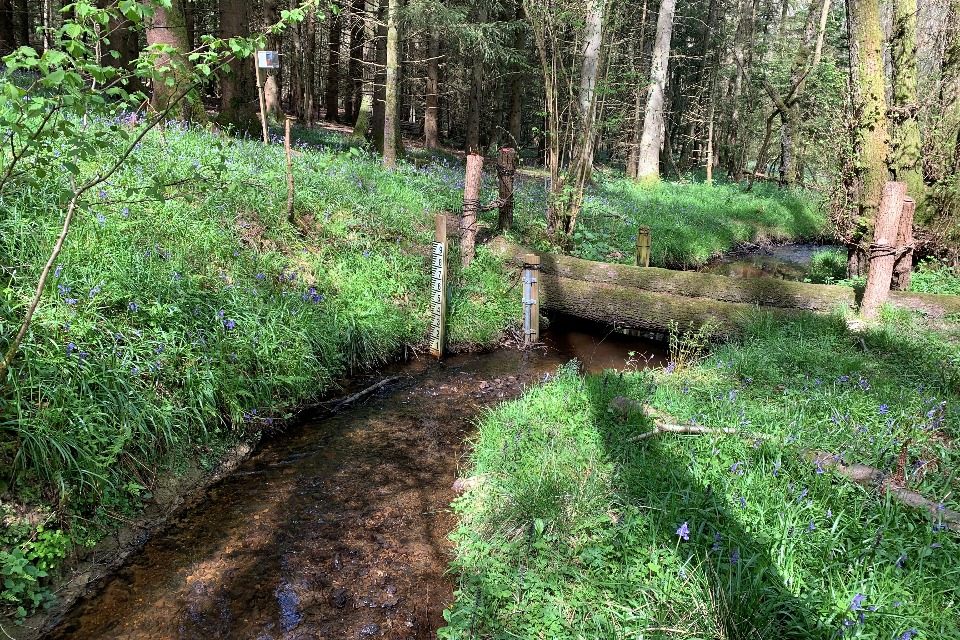
Slowing the flow with leaky dams within the Surrey Hills area. Photo credit: Andrew Turton, Defra Communications
The NFM programme
In September 2023 the Environment Agency and Defra announced £25 million funding for improving flood resilience through a new NFM programme.
The Environment Agency is managing this programme.
The NFM Programme will help meet the aims of the National Flood and Coastal Erosion Risk Management Strategy (FCERM) for England.
The programme will build on and apply what we learnt from the £15 million NFM pilot programme, which included 60 projects between 2017 and 2021.
We want people and places to make greater use of nature-based solutions. This will help enhance flood and coast resilience and nature recovery as set out in the FCERM Strategy Roadmap to 2026.
The programme aims
The programme aims to:
- reduce local flood risk using NFM
- provide wider benefits to the environment, nature and society
- accelerate new and existing opportunities for NFM delivery and financing
- further improve evidence of NFM by filling knowledge gaps
Eligible NFM measures include:
- soil and land management
- river and floodplain management
- woodland management
- run-off management
- coast and estuary management
You can find out more in the NFM prospectus.
We invited applications from a wide range of groups, including:
- farmers
- landowners
- environmental non-governmental organisations (including wildlife trusts, rivers trusts)
- catchment groups
- risk management authorities (including Environment Agency)
There was huge interest with a wide variety of applications from across England. We independently reviewed these with input from Defra and Natural England technical experts.
3638 projects aremoving readyinto for implementation delivery
Thirty-sixAll 38 project business cases are complete. TheSome teams are gettingactively readydelivering toon carrythe outground, workwhile onothers theare ground.finalising preparations to begin implementation.
These are:
- Brampton 2 Zero CiC: Brampton NFM project
- Cheshire Wildlife Trust: Meols NFM scheme
- City of Doncaster Council: Bentley NFM opportunities
- City of Trees Trust: Crompton Moor Slow the Flow Leaky Dams
- Community Forest Trust: Whitewell Brook NFM
- Dorset AONB Partnership (hosted by Dorset Council): West Dorset Rivers & Coastal Streams NFM programme
- East Mercia Rivers Trust: Field Beck NFM – Holdingham,
SleafordSleaford - Environment Agency: Middle Brook NFM
- Essex County Council: Hockley Woods Leaky Dams
- Future Landscapes Trust: Marsham Valley NFM partnership
- Leicester City Council: Leicester Urban NFM – Willow Brook catchment
- Lincolnshire County Council: Barrow Beck chalk stream restoration
- Lincolnshire County Council: Building Flood Resilience in the River Rase catchment
- London Borough of Hillingdon: Pinn Meadows NFM
- Mersey Rivers Trust: Alt catchment NFM
- National Trust: Common Farm hydrological restoration
- National Trust: Northey Island causeway saltmarsh management
- National Trust: Poynton and Micker (Norbury) catchment plan (Headwaters)
- National Trust: Resilient Coledale
- National Trust: Swan Brook wetlands
- Norfolk County Council: North Attleborough flood alleviation scheme
- Nottinghamshire County Council: Cropwell Butler NFM
- Nottinghamshire Wildlife Trust: Saving Worksop and Shireoaks through NFM
- Ribble Rivers Trust: Ribble Revival: Clitheroe community catchment
- Ribble Rivers Trust: Ribble Revival: Darwen community catchment
- Ribble Rivers Trust: Ribble Revival: Wrea Green community catchment
- River Waveney Trust: Diss NFM
- Royal Borough of Greenwich Council: Marsh Dykes and Thamesmead flood alleviation network
- RSPB: Beneficial Use of Dredged Sediment (BUDS) in the Blackwater Estuary
- Severn Rivers Trust: Illey Brook NFM
- Sidbury Manor Estate: Sidbury Manor Estate and the River Sid catchment
- South East Rivers Trust: High Weald AONB NFM project (Alder Stream)
- South Oxfordshire District Council: The Goggs, Watlington NFM scheme
- Surrey County Council: Ash Ranges NFM
- The Friends of Cannizaro Park: Cannizaro Park NFM programme
- Westcountry Rivers Trust and Environment Agency: Climate Resilient Otter Catchment (CROC)
- Westcountry Rivers Trust: Climate Resilient Mevagissey
- Wyre River Trust: Wyre Catchment resilience programme
We are also working with 2 projects to make their business cases stronger.
These are:
EnvironmentAgency:MiddleBrookNFMNottinghamshireCountyCouncil:CropwellButlerNFM
A variety of communities and habitats will benefit from these 38 projects across England. They cover urban to rural, upland to lowland and inland to coastal locations.
These projects will carry out a mixture of NFM measures at a range of scales. They will seek to manage flood risk from a variety of sources including from rivers, surface water and the sea.
The measures include:
- new NFM features, such as leaky barriers, wet woodlands, ponds and wetlands – these will help to slow and store high flows, reducing the chance and impact of flooding downstream
- soil and land management – which will slow and store surface water runoff, while also reducing soil erosion and improving water quality
- new woodland areas and hedgerows – which will support wetland complexes and the creation of new habitats
- expansion and enhancement of saltmarsh and sand dune systems - these natural barriers will break wave action and reduce the risk of tidal flooding to local communities
Work will take place on these projects between now and 31 March 2027. This will involve a range of organisations including:
- wildlife trusts
- rivers trusts
- local authorities working with local communities
- farmers
- landowners
Updates to this page
-
Added 2 projects to the list of projects ready for implementation - 'Nottinghamshire Wildlife Trust: Saving Worksop and Shireoaks through NFM' and 'Westcountry Rivers Trust and Environment Agency: Climate Resilient Otter Catchment (CROC)'.
Update history
2026-02-13 16:15
Updated the list of 38 projects to reflect the latest projects in delivery as of February 2026.
2025-09-29 15:30
Added ‘Environment Agency: Middle Brook NFM’ and ‘Nottinghamshire County Council: Cropwell Butler NFM’ to the list of 38 projects moving into delivery.
2025-04-01 16:30
Added 2 projects to the list of projects ready for implementation – ‘Nottinghamshire Wildlife Trust: Saving Worksop and Shireoaks through NFM’ and ‘Westcountry Rivers Trust and Environment Agency: Climate Resilient Otter Catchment (CROC)’.
2024-11-05 16:18
Removal of outdated information in the NFM programme section. Added an updated list of projects ready for implementation and developing stronger business cases.
2024-02-23 08:48
Removed details of how to apply to the NFM programme and replaced with details of the 40 successful projects chosen for the programme.