Mpox: affected countries
This page provides an overview of mpox epidemiology, indicating where there may be a risk of clade I and clade II mpox exposure.
Global overview
There are 2 major genetic groups (clades) of the mpox virus (MPXV), clade I (formerly known as Central African or Congo basin clade) and clade II (formerly known as West African clade). Clade I is split into clade Ia and clade Ib. Clade II is split into clade IIa and clade IIb, and all clades have subgroup clusters called lineages. The majority of the cases seen in the global outbreak which started in 2022 were from clade IIb, lineage B.1. The latest epidemiological data on mpox (all clades) can be found on the World Health Organization (WHO) mpox surveillance dashboard.
Figure 1. Geographic distribution of MPXV clades, by country, as reported on 2728 OctoberNovember 2025
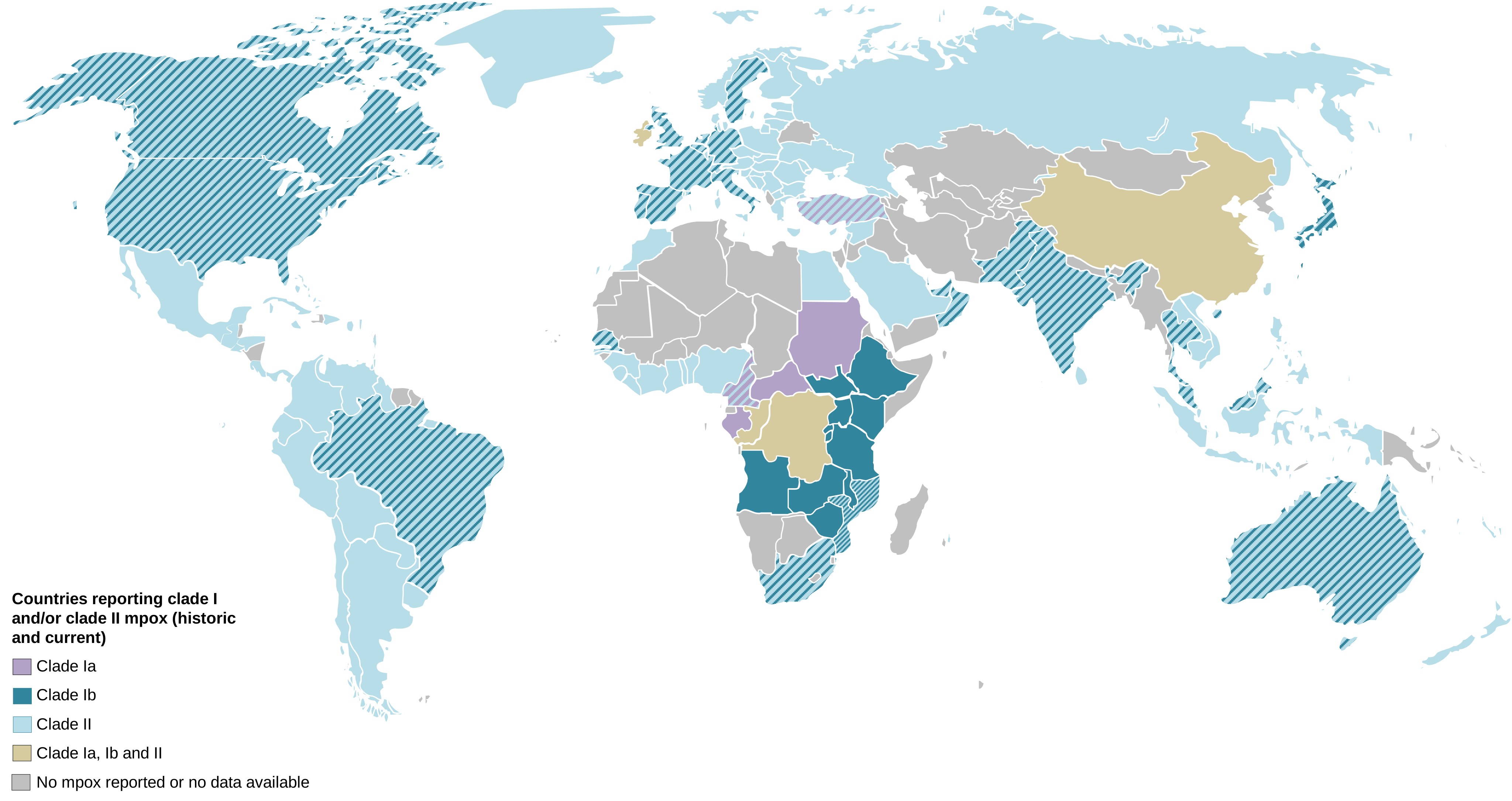
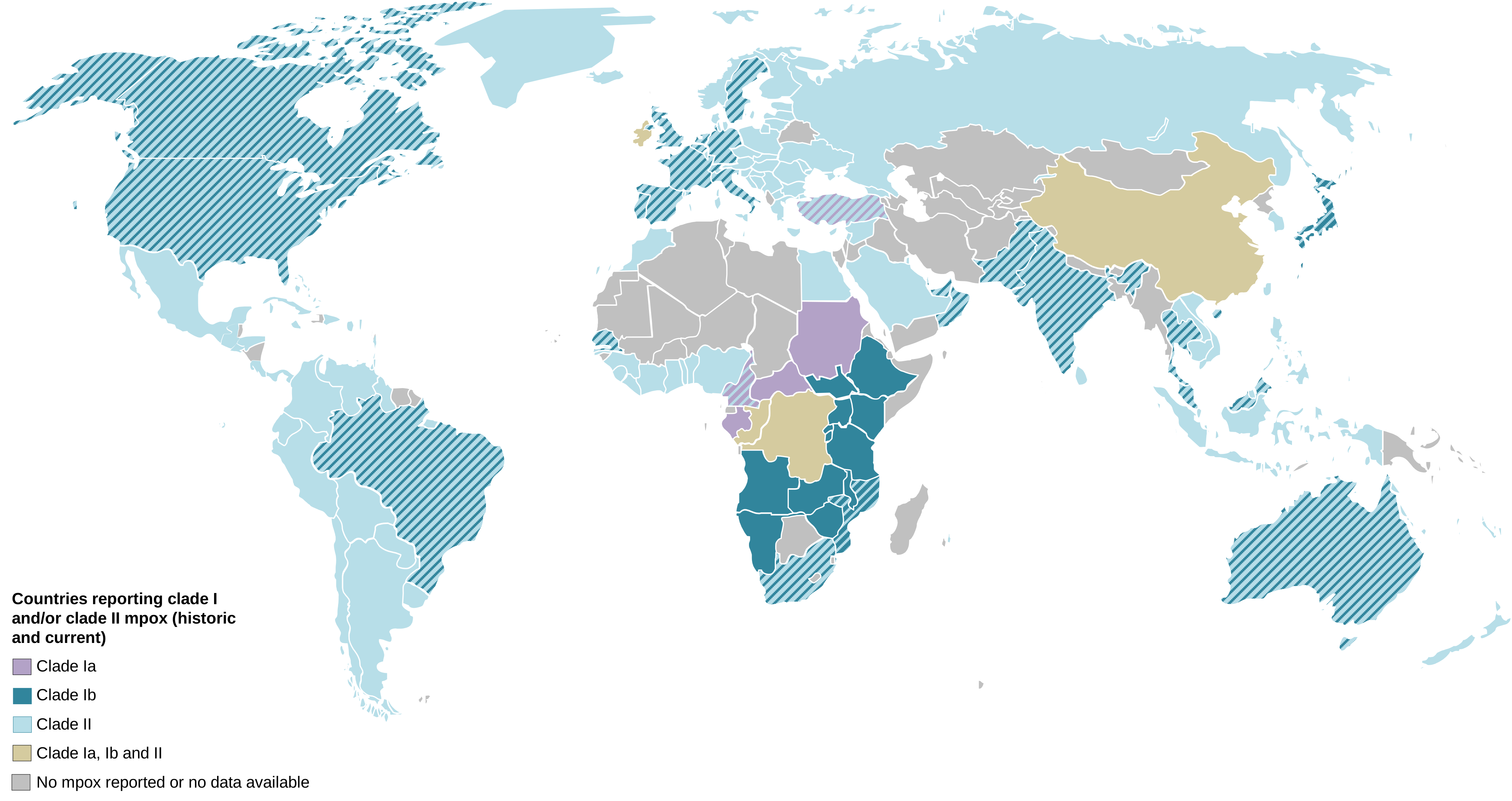
Adapted from the WHO’s Global Mpox Trends dashboard.
The map is not indicative of ongoing outbreaks and is generated from available laboratory data associated with both travel-associated and locally acquired cases.
Table 1. Countries reporting the highest number of recent mpox cases (all clades)
Adapted from the WHO’s Global Mpox Trends dashboard section 5.2. Dashboard updated OctoberNovember 2025 with data up to 3031 SeptemberOctober 2025. Date accessed: 2728 OctoberNovember 2025.
| Country | Cases in the past month | Total confirmed cases | Clades reported |
|---|---|---|---|
| Democratic Republic of the Congo | Clades Ia and Ib (clade II has also been reported) | ||
| Liberia | Clade II | ||
| Clade Ib and II | |||
| Clade Ib | |||
| Clade |
|||
| Clade |
|||
| Sierra Leone | Clade II | ||
| Spain | Clade Ib and II | ||
| China | Clades Ia and Ib (travel associated) and II | ||
| Clade |
Clade I mpox outbreak: 2024 to 2025
Between 14 August 2024 and 5 September 2025, the WHO declared a Public Health Emergency of International Concern (PHEIC) in response to the upsurge of clade I mpox in the Democratic Republic of the Congo and a growing number of countries in the African Region. ThisAlthough the outbreak no longer constitutes a PHEIC, the outbreak remains ongoing, with evidence of sustained community transmission in several countries, as per Table 2.
Figure 2. African region countries reporting laboratory confirmed clade I mpox (historic or current)
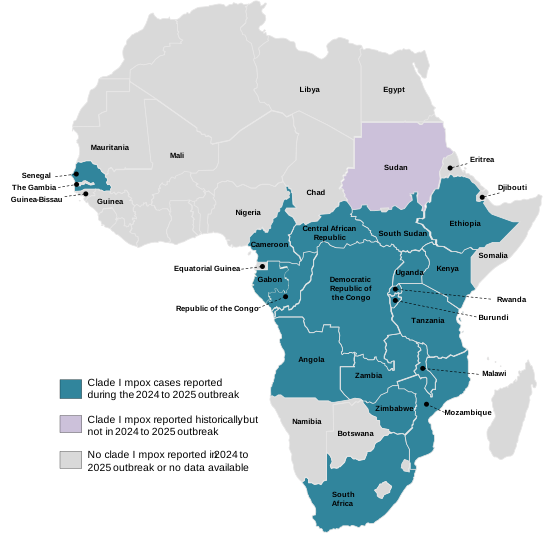
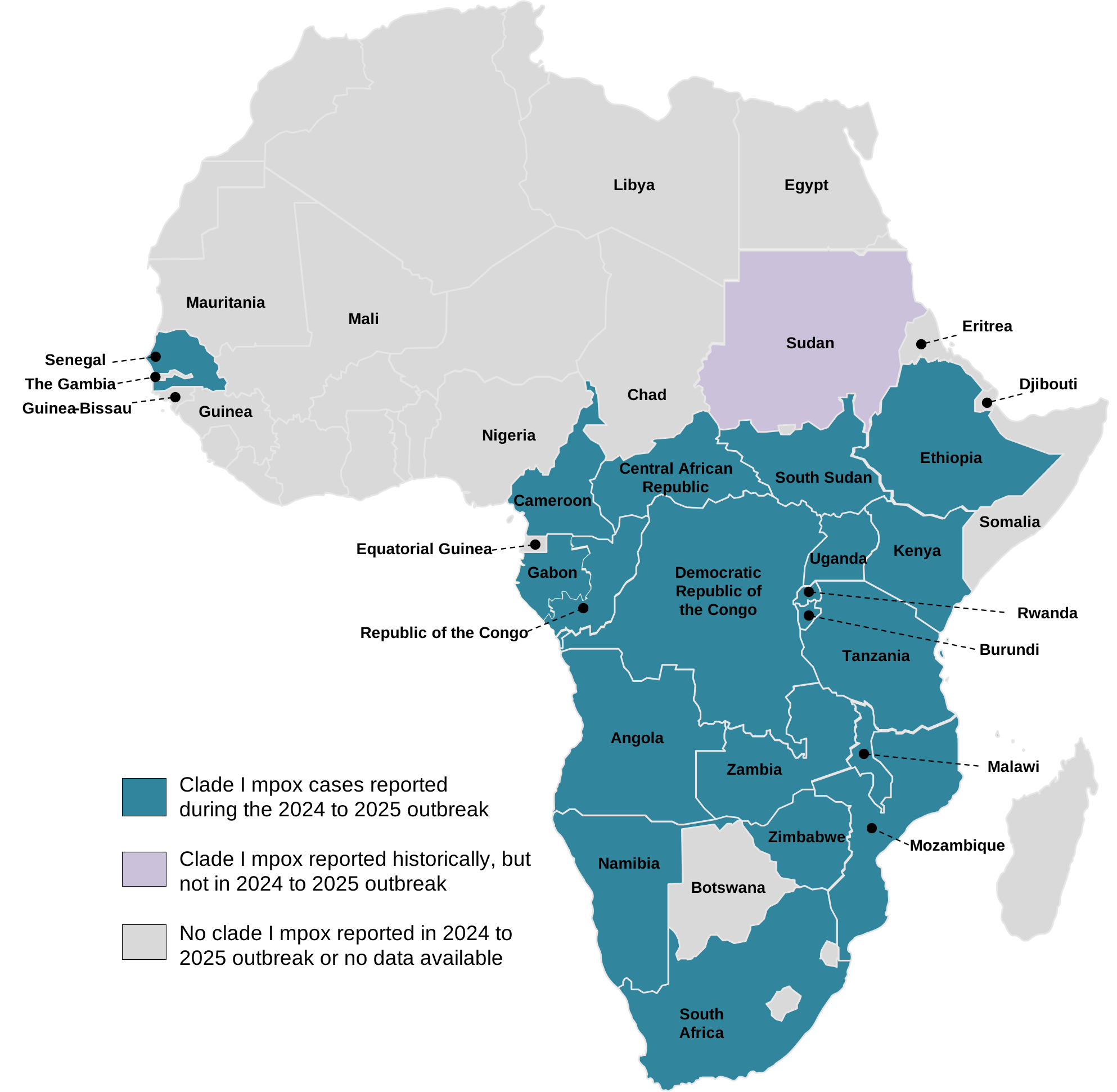
Travel-associated clade I mpox cases outside the African Region have been reported in several countries. Limited local transmission (for example, household transmission) has been reported in Australia, Belgium, China, France, Germany, Qatar, Republic of Ireland and the United Kingdom. In October 2025, community transmission of clade I mpox was reported in several European countries and the USA for the first time. The WHO defines community transmission as at least one reported case with no epidemiological link to travel or contact with a traveler from a country with known mpox transmission.
Table 2. Countries with evidence of ongoing clade I mpox transmission or exportation during the 2024 to 2025 outbreak
| Country | Evidence of transmission | Clade |
|---|---|---|
| Burundi | Community transmission | Ia |
| Cameroon | Community transmission | Ia |
| Central African Republic | Community transmission | Ia |
| Democratic Republic of the Congo | Community transmission | Ia and Ib |
| Ethiopia | Community transmission | Ib |
| Italy | Community transmission | Ib |
| Kenya | Community transmission | Ib |
| Malawi | Community transmission | Ib |
| Malaysia | Community transmission | Ib |
| Mozambique | Community transmission | Ib |
| Netherlands | Community transmission | Ib |
| Oman | Unclear (evidence of exported cases) | Ib |
| Portugal | Community transmission | Ib |
| Republic of the Congo | Community transmission | Ia and Ib |
| Rwanda | Community transmission | Ib |
| South Sudan | Community transmission | Ib |
| South Africa | Community transmission | Ib |
| Spain | Community transmission | Ib |
| Tanzania | Community transmission | Ib |
| Thailand | Unclear (evidence of exported cases) | Ib |
| Uganda | Community transmission | Ib |
| United Arab Emirates | Unclear (evidence of exported cases) | Ib |
| United States | Community transmission | Ib |
| Zambia | Community transmission | Ib |
Updates to this page
-
page updated with latest WHO mpox dashboard data
-
Amended 9,0218 figure (Spain) in Table 1 to 9,028.
-
Updated world map, table 1 (latest WHO data) and Table 2 with new countries reporting community transmission as designated by WHO.
-
Updated maps, limited local transmission in non-African countries and the primary data table
-
Table 1 updated with latest WHO data
-
Figure 1 and Table 2 updated with latest data from WHO (3 August 2025).
-
Updated based on latest WHO data
-
Figure 1 and Table 2 updated based on the latest WHO emergency situation report #55.
-
Updated Figure 1, updated Table 1 and Table 2 with latest data.
-
Updated affected countries data. Added Ethiopia.
-
Updated the case numbers and figure 1.
-
Updated Figure 1 and Figure 2, addition of Malawi to country list.
-
Update on Mpox global distributions image and an update to table of countries mpox cases.
-
Updated Table 1 and Africa map.
-
Updated to include clade II mpox and world map of mpox clade distribution.
-
Added entries for Brazil and Qatar.
-
Updated to reflect new cases since 14 February.
-
Updated Zambia status.
-
Added Republic of Ireland and a few other minor changes.
-
Updated the list of affected countries.
-
Tanzania added to Table 1. Updates added for travel-associated cases in Germany (URL also updated) and the UK.
-
Belgium has been updated to reflect one new case reported in a household contact of their first imported case.
-
Updated to include information for Belgium, China and France.
-
Updated information for Gabon and added information for United Arab Emirates.
-
Updated links and added Oman & Pakistan to list.
-
Updated guidance.
-
Updated information for imported clade I mpox cases in countries outside of the African region.
-
First published.